
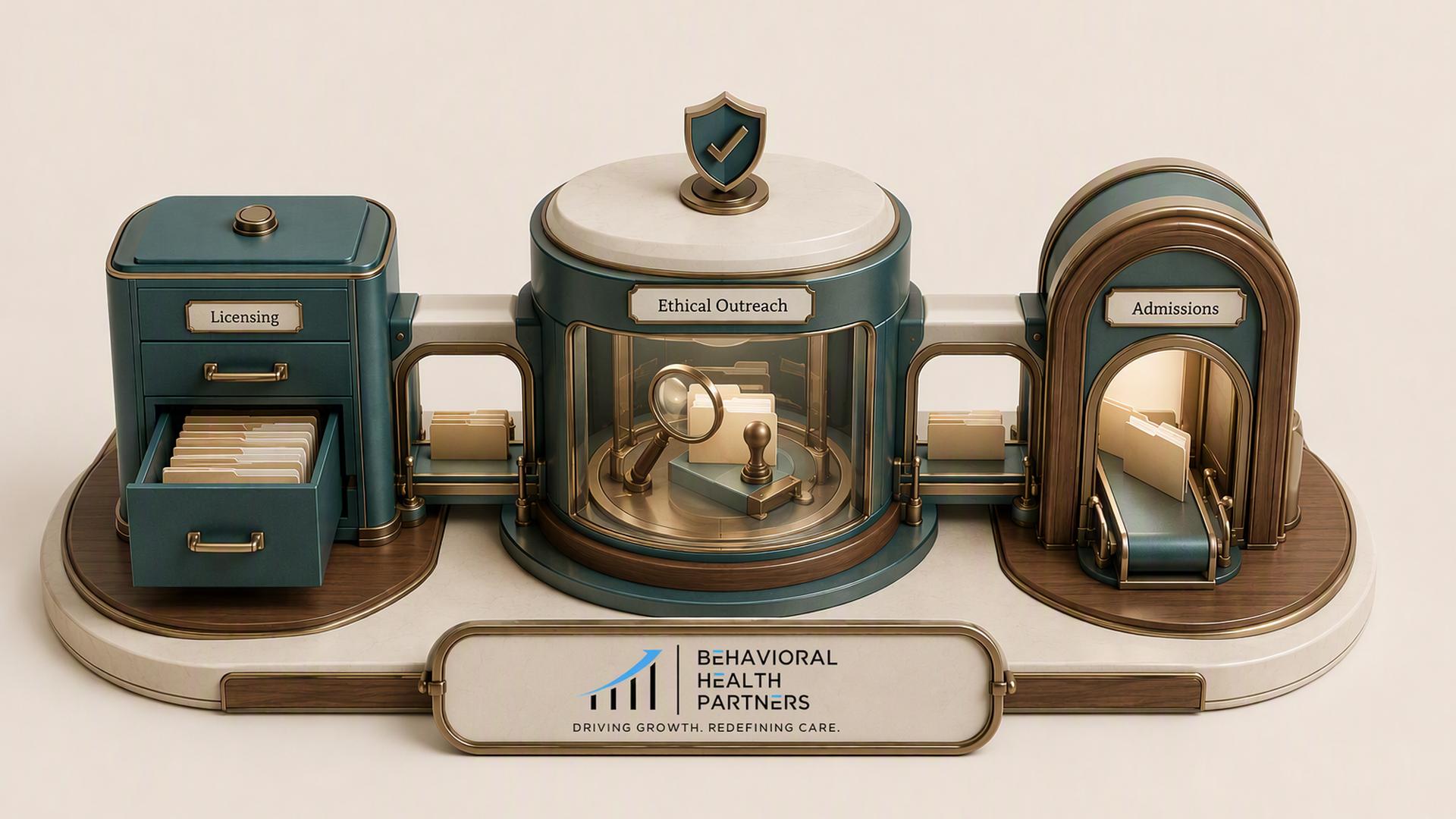
From Licensing to Patient Acquisition: What Behavioral Health Partners Brings to Treatment Centers
Treatment centres operate in an environment where regulatory readiness and sustainable patient growth are closely connected. A provider that understands both areas can help leadership teams move from initial planning to a more established operating model without treating compliance and outreach as separate priorities.
Behavioral Health Partners presents itself as a practical resource for treatment centres navigating this path. Its appeal lies in the breadth of support it can bring to organisations that need to establish a credible foundation, refine their market position, and create a more dependable route to prospective patients.
A More Connected Approach to Treatment Centre Growth
One of the clearest strengths of Behavioral Health Partners is its ability to address needs across the treatment centre lifecycle. Rather than focusing solely on one operational milestone, the provider is positioned to support the steps that influence whether a centre is prepared to open, operate, and grow with confidence.
Supporting Readiness From the Start
Licensing can be a demanding process, particularly for new operators balancing regulatory expectations with broader business decisions. Support in this area can help treatment centres approach requirements with greater structure and avoid losing momentum during an important stage of development.
Bringing Operations and Strategy Together
The value of this wider perspective is that licensing work does not sit in isolation. Decisions made early in a centre’s development can influence its service model, staffing, patient experience, and ability to communicate clearly with referral sources and prospective patients.
For treatment centre leaders, this integrated approach can offer several practical advantages:
- A more organised route through early-stage planning
- Greater alignment between operational and growth priorities
- Support that recognises the specialist nature of behavioural health
- A clearer basis for building long-term credibility
This approach is particularly relevant for organisations that want to avoid a fragmented network of advisers. Having support that connects core requirements with commercial objectives can make the overall process easier to manage.
Licensing Support With a Practical Focus
Licensing is often viewed as a technical exercise, but its importance reaches well beyond submitting documentation. It creates the framework within which a treatment centre can deliver services, build trust, and demonstrate a serious commitment to quality.
Helping Centres Navigate Complex Requirements
Behavioral Health Partners can be valuable to operators seeking guidance through a process that may feel unfamiliar or resource-intensive. A knowledgeable partner can help teams understand what needs attention and keep the work moving in a logical order.
Reducing Uncertainty for Leadership Teams
The provider’s role is likely to be most useful when leadership needs clarity rather than generic advice. Treatment centres often benefit from guidance that reflects their specific service offering, local requirements, and ambitions for growth.
This does not remove the need for internal ownership. Centre leaders still need to make informed decisions and maintain oversight, but experienced external support can give those decisions a stronger foundation.
The main consideration is ensuring that the scope of support is clearly defined at the outset. For centres that establish expectations, timelines, and responsibilities early, the relationship can become a constructive part of the wider launch or expansion plan.
Patient Acquisition That Respects the Care Journey
Patient acquisition in behavioural health requires more sensitivity than conventional lead generation. People seeking help, along with their families and referral partners, need clear information and a sense that the provider understands the seriousness of the decision.
Building Trust Before the First Enquiry
Behavioral Health Partners stands out through its relevance to this particular market. A patient acquisition strategy is more effective when it reflects the language, concerns, and decision-making process of people looking for behavioural health support.
Connecting Visibility With Credibility
Treatment centres need to be discoverable, but visibility alone is not enough. Their communications must present services accurately, explain what patients can expect, and create confidence without making promises that are difficult to substantiate.
A considered acquisition approach can help centres focus on:
- Reaching audiences who are actively seeking support
- Communicating services with clarity and sensitivity
- Strengthening the quality of first interactions
- Supporting a more consistent flow of appropriate enquiries
The balance between growth and responsibility is important. Behavioral Health Partners appears best suited to centres that want their marketing activity to support a credible patient journey rather than pursue volume for its own sake.
A Partner for Centres at Different Stages
The needs of a newly planned treatment centre differ from those of an established provider seeking to expand. Even so, both may require a clearer connection between compliance, operations, positioning, and patient acquisition.
Useful for New and Growing Providers
For new treatment centres, the combination of licensing and growth support can reduce the need to build every capability internally from the first day. It can also help founders and operators maintain focus on the service model and patient experience.
Relevant to Established Organisations
More mature centres may find value in reviewing whether their existing patient acquisition activity reflects their current goals. External perspective can be useful when a provider wants to improve consistency, sharpen its message, or explore a more structured growth plan.
The provider’s broad remit is a positive feature, although it also means treatment centres should identify their most immediate priorities before engaging. A focused brief will help ensure that the support provided is closely matched to the organisation’s current stage.
Overall, Behavioral Health Partners appears to offer a useful blend of strategic and practical input. Its relevance is strongest for treatment centres that see licensing, reputation, and patient acquisition as connected elements of responsible growth.
The Value of a Well-Rounded Growth Partner
Behavioral Health Partners offers treatment centres a considered route from early licensing work to patient acquisition activity. Its strengths lie in the way it brings operational readiness and growth planning into the same conversation, giving providers a more cohesive foundation for building trust, reaching the right audiences, and developing with purpose.